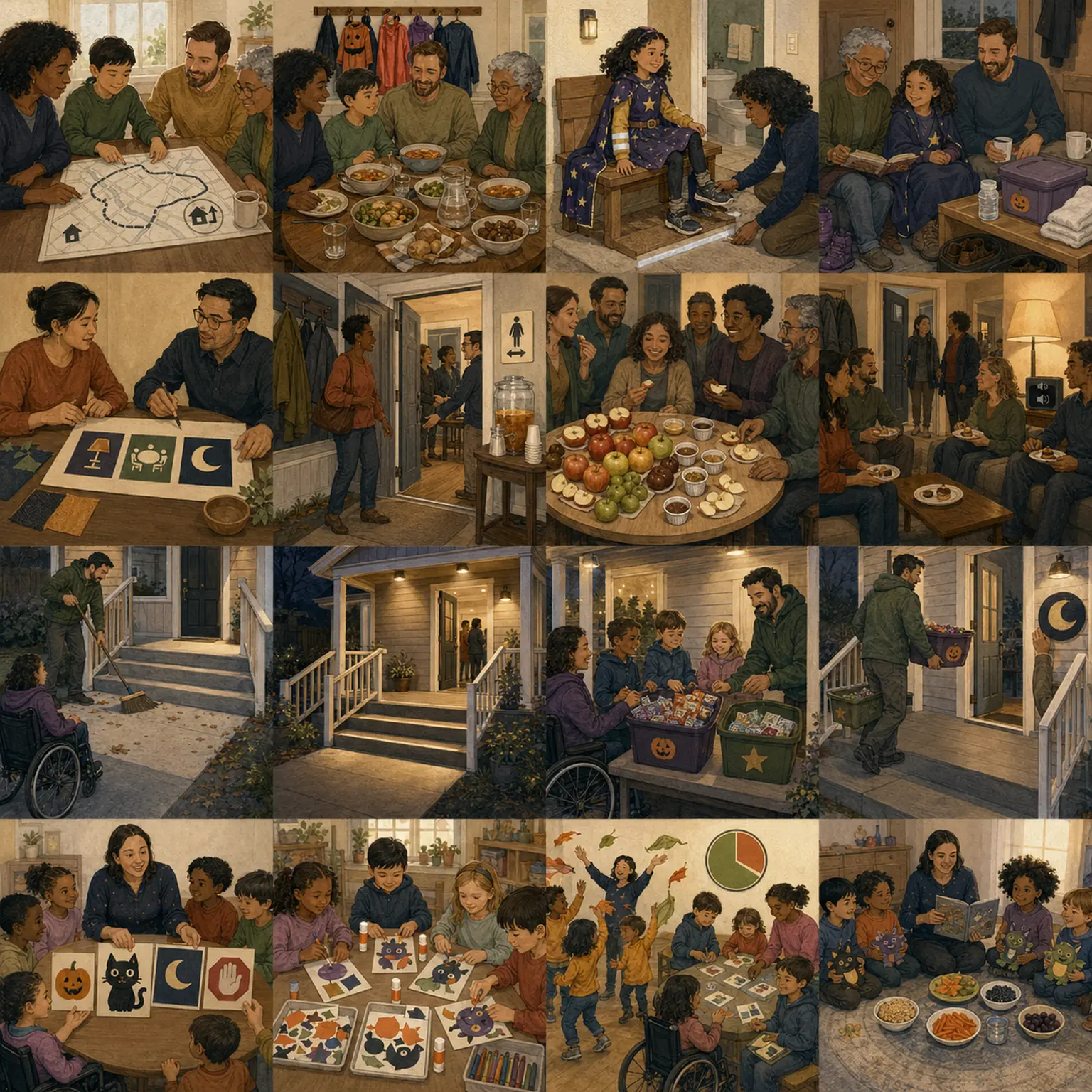
Homes, classrooms, porches, and gatherings around costumes or children
Create flame-free atmosphere
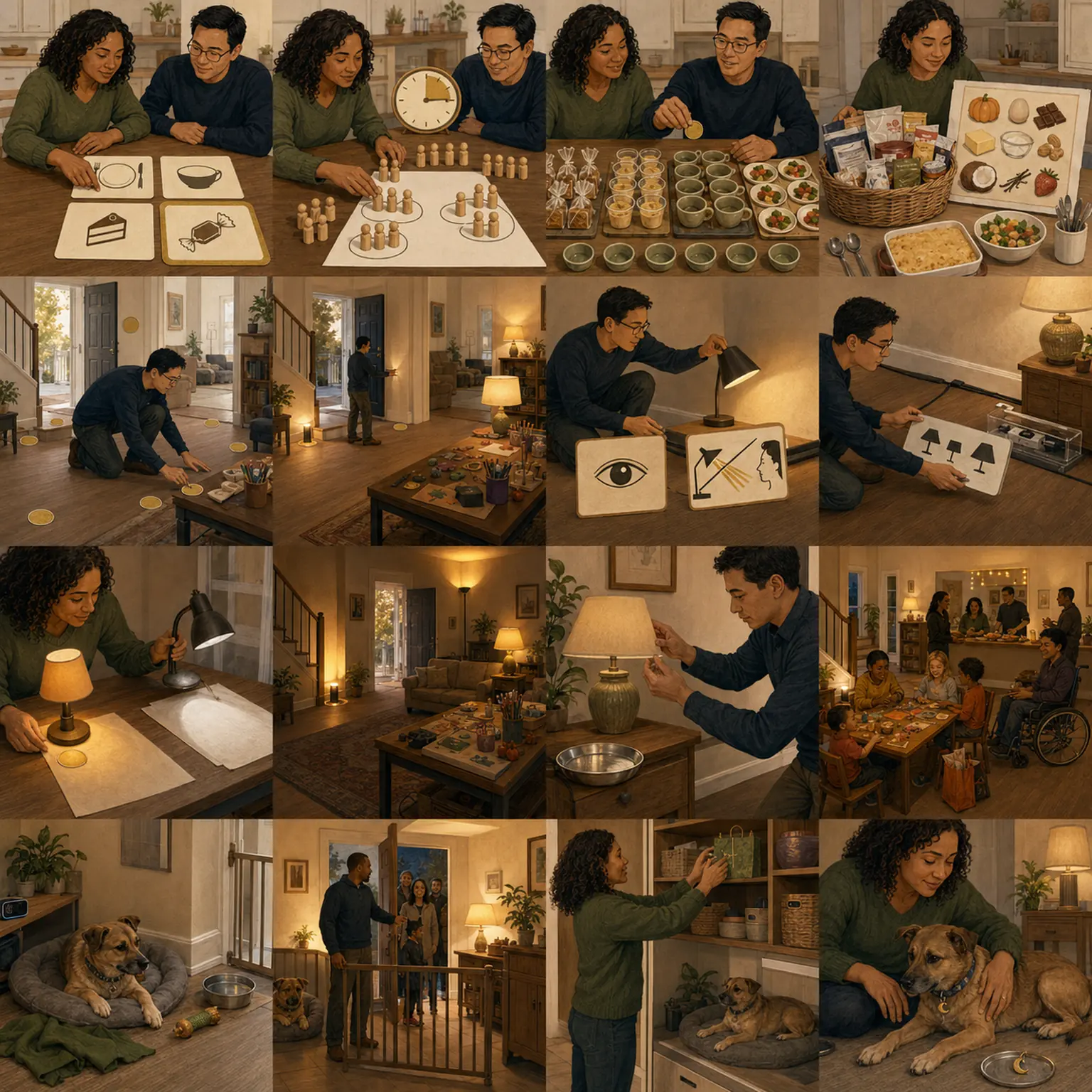
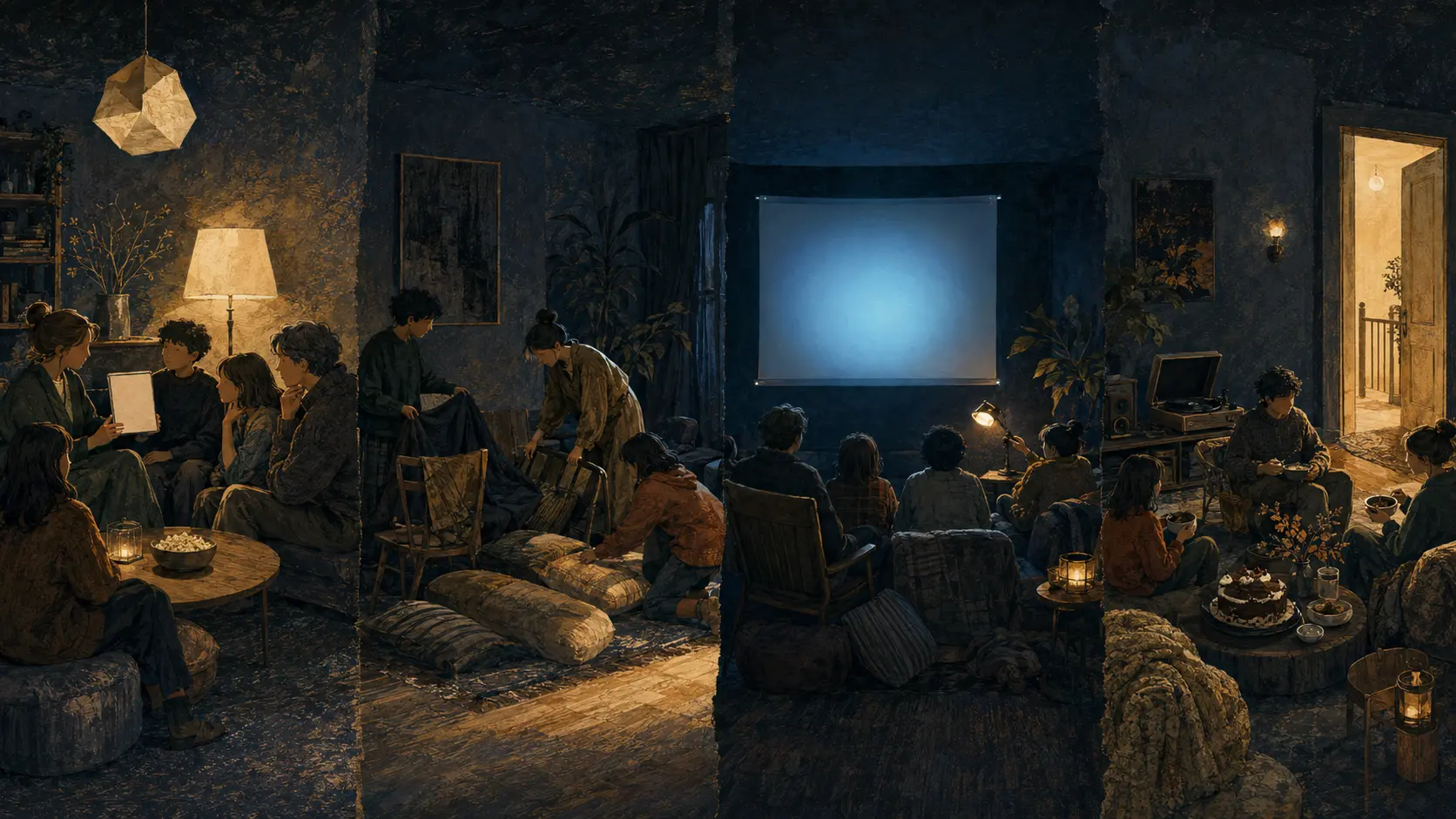
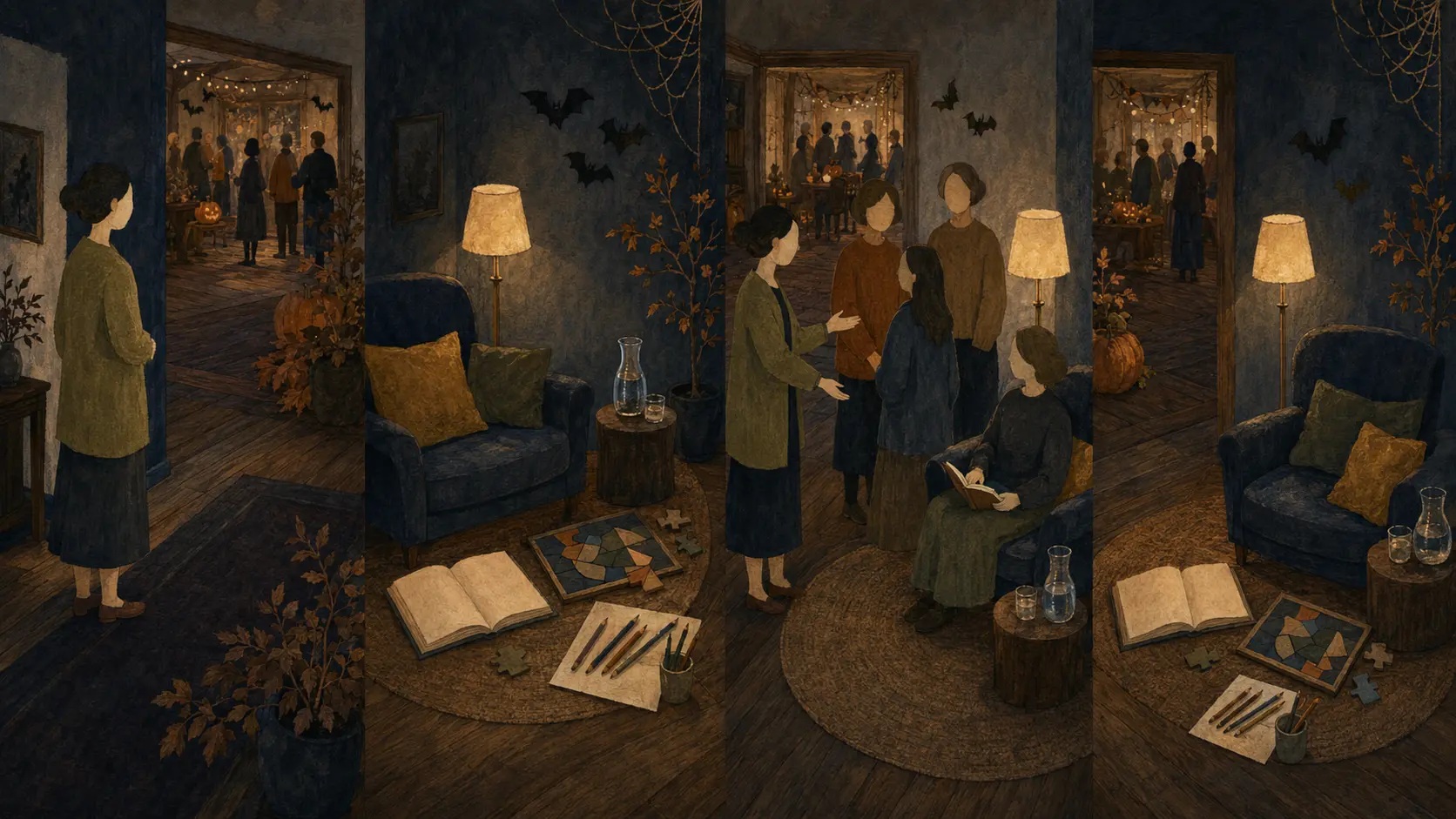
Build warmth through color temperature, reflection, shadow, and repetition instead of exposed flame.
Decisions to make
Resolve these before choosing more things.
- 1
Choose one light temperature
Use warm amber or moon-cool light consistently instead of mixing every color.
- 2
Repeat at three heights
Place safe light low, at table height, and above eye level.
- 3
Shape the light
Use paper shades only with compatible cool-running products and follow their instructions.
- 4
Leave the route plain
Keep steps, exits, tools, and serving areas clearly illuminated.
Realistic timeline
Work backward from the night.
- Gather and test
Confirm battery life and product placement requirements.
- Build shades and reflectors
Keep materials away from heat and ventilation openings.
- Balance the layers
Turn off sources one by one until each remaining light has a job.
- Remove batteries for storage
Store reusable pieces dry and labeled.
Common failure points
What usually makes this harder.
- Hiding heat or battery access inside decoration
- Mixing harsh white and saturated color everywhere
- Making the exit part of the dark effect
Adapt the pattern
Keep the purpose; change the method.
- Use reflective paper instead of more lights.
- Create atmosphere with a projected shadow pattern.
- Use a single illuminated table as the whole scene.
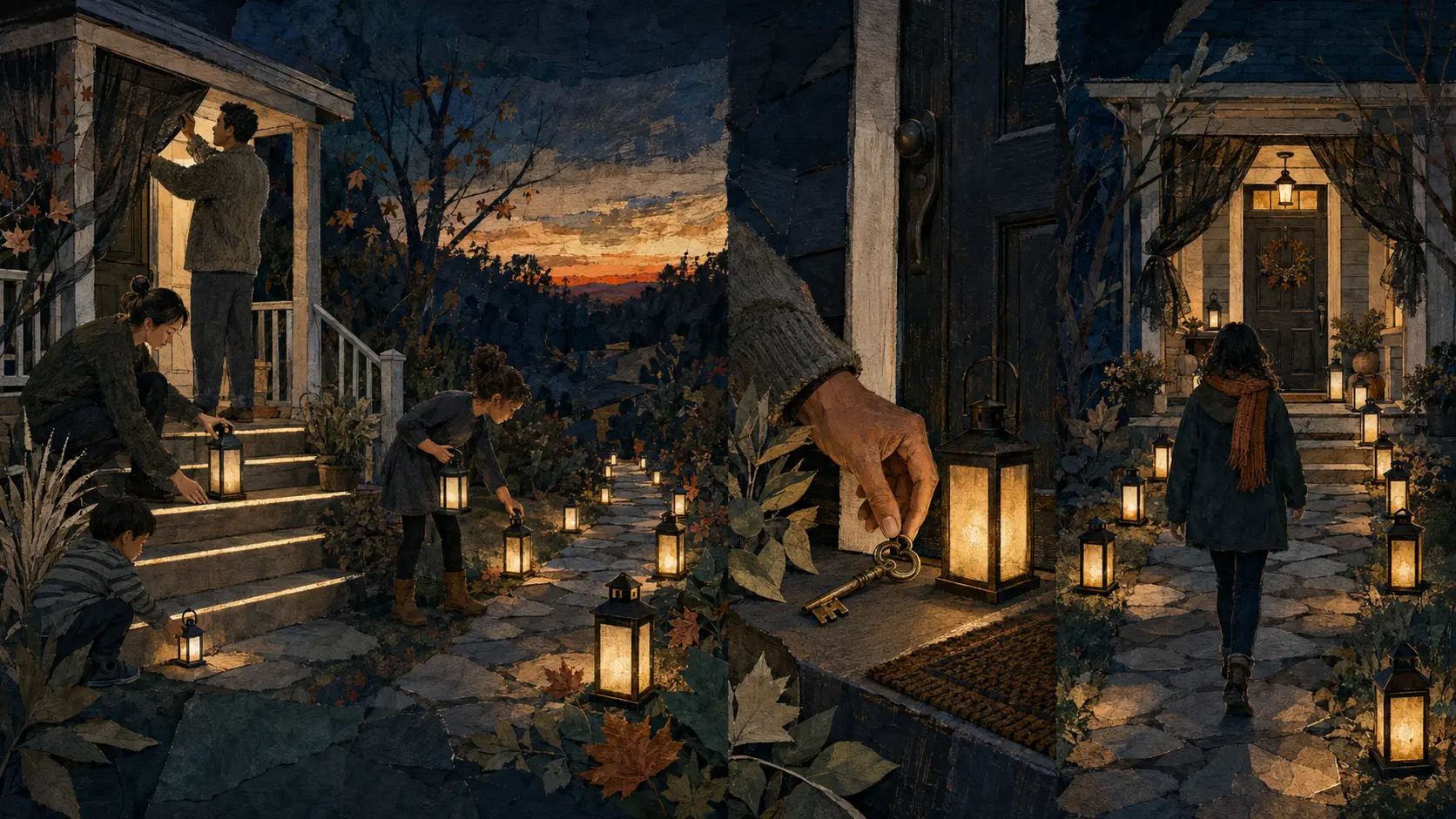
Put the plan into the world
Ideas that fit this plan.
Review & sources
Practical guidance, with a visible review trail.
Reviewed July 15, 2026. Conditions, product instructions, weather, and local requirements still take priority.
Keep planning