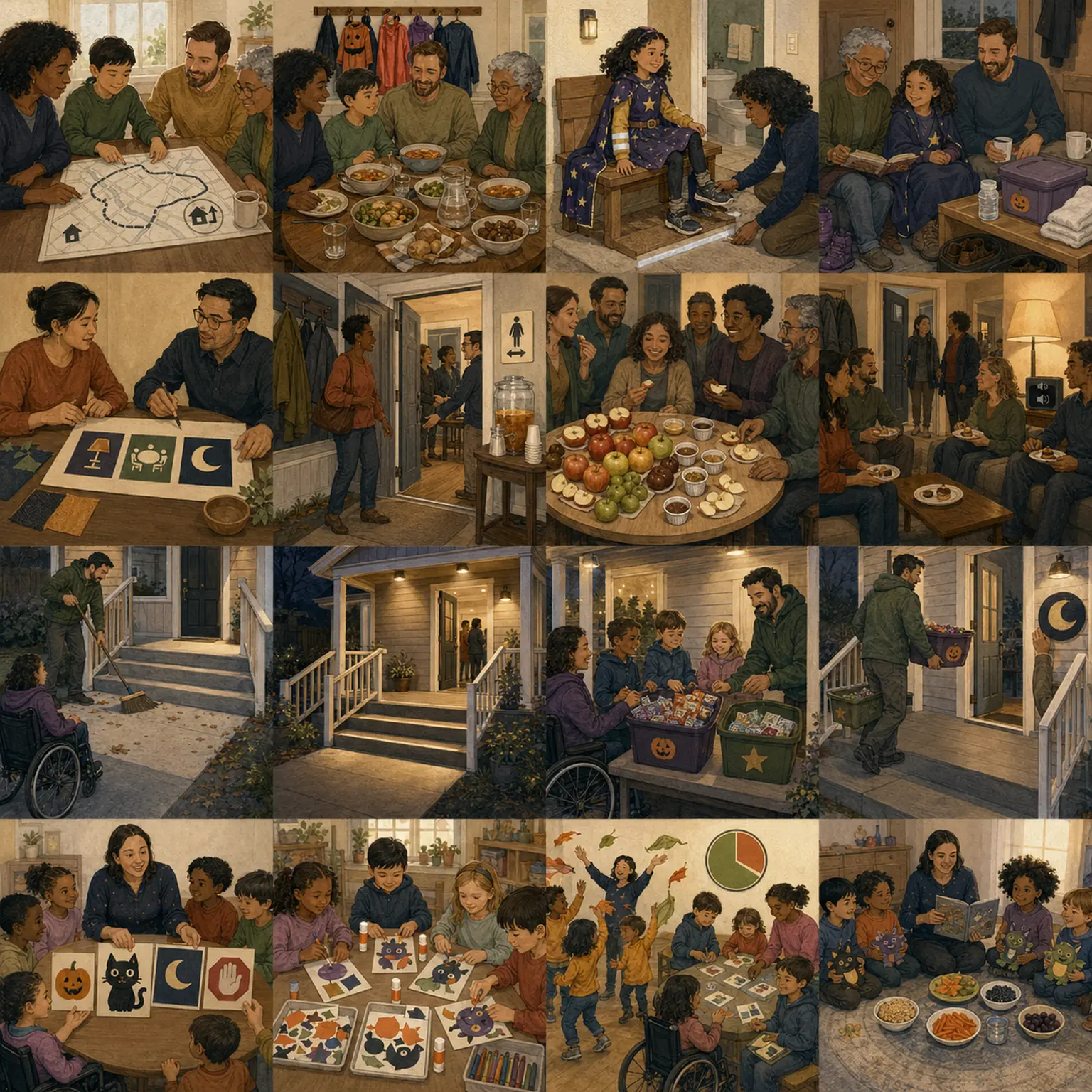
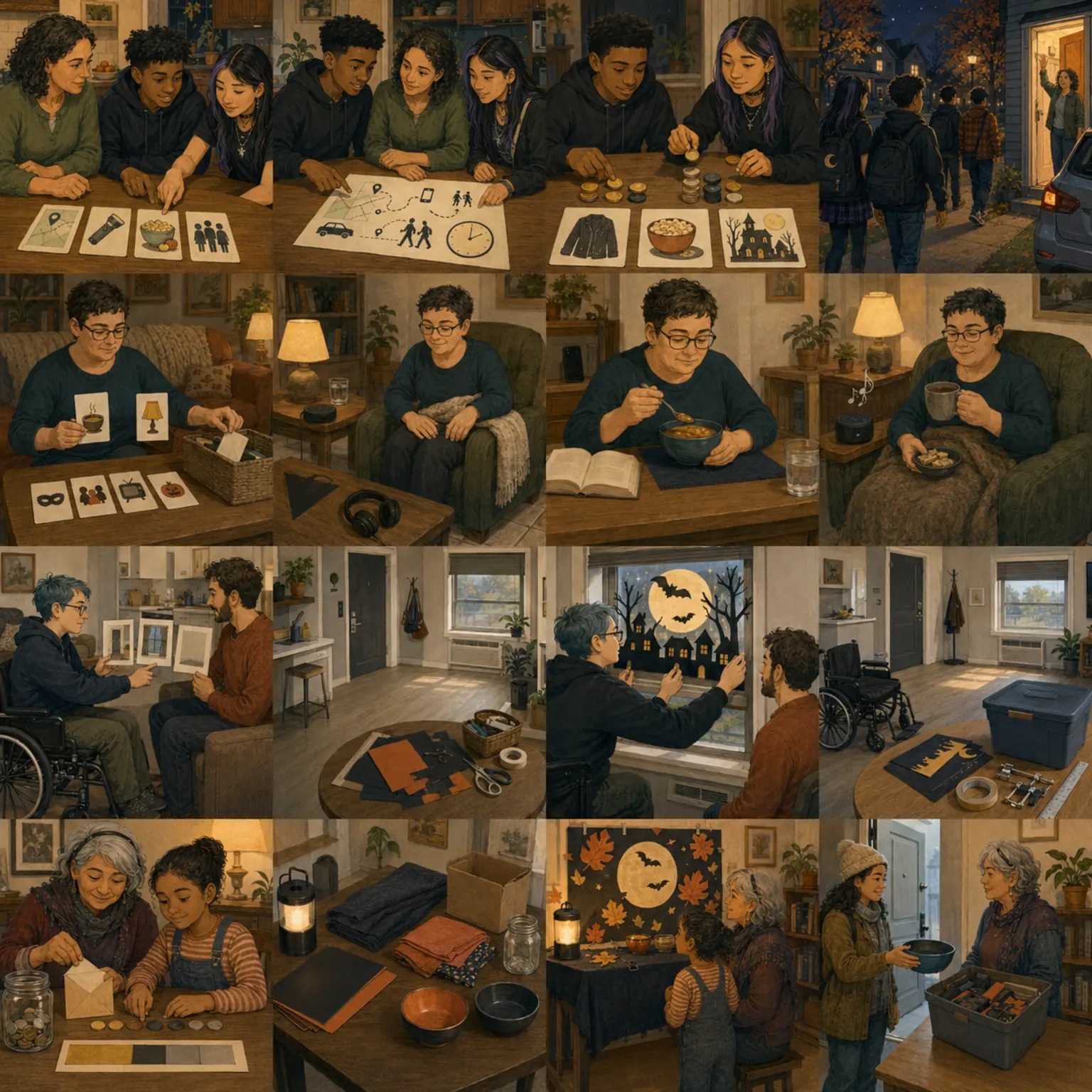
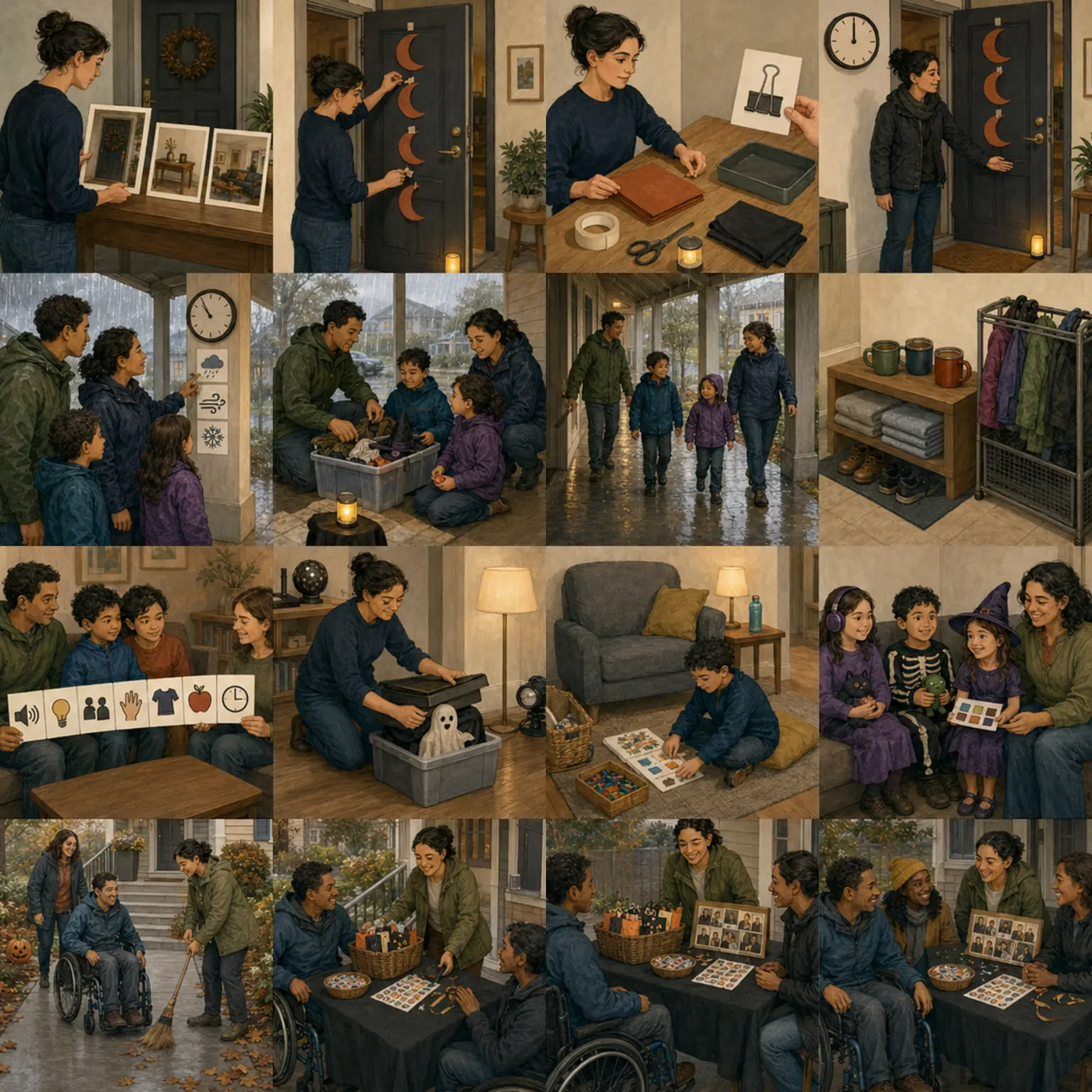
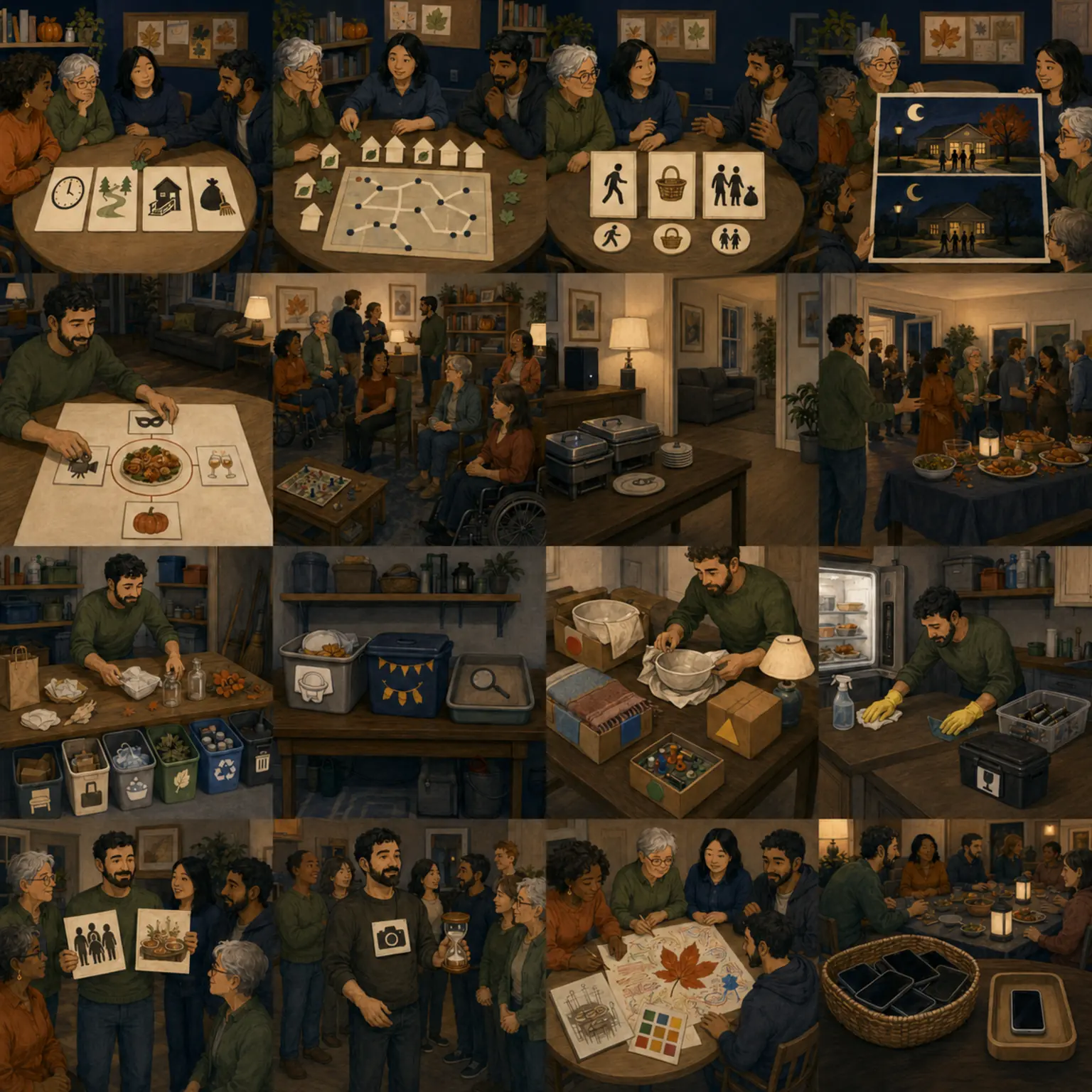
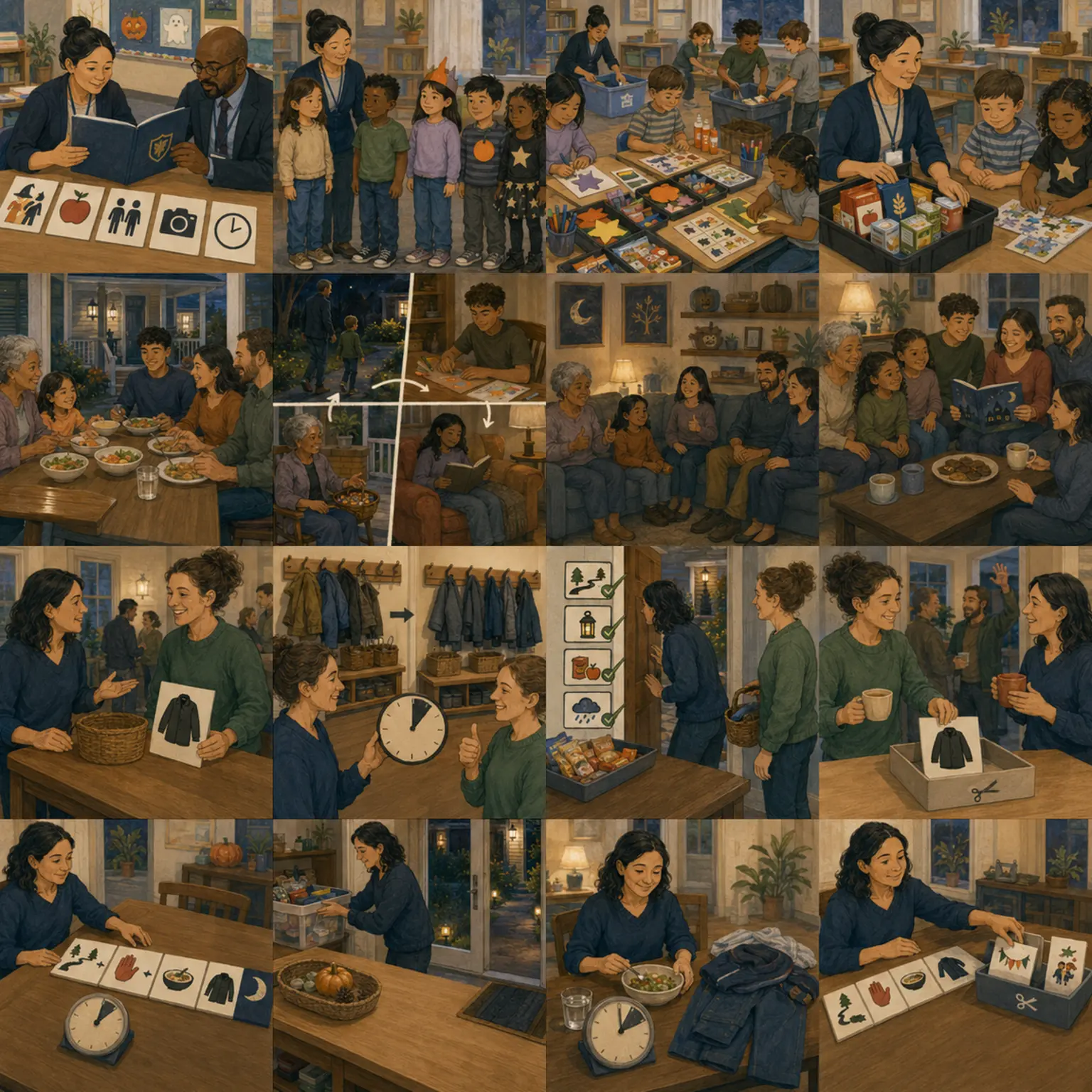
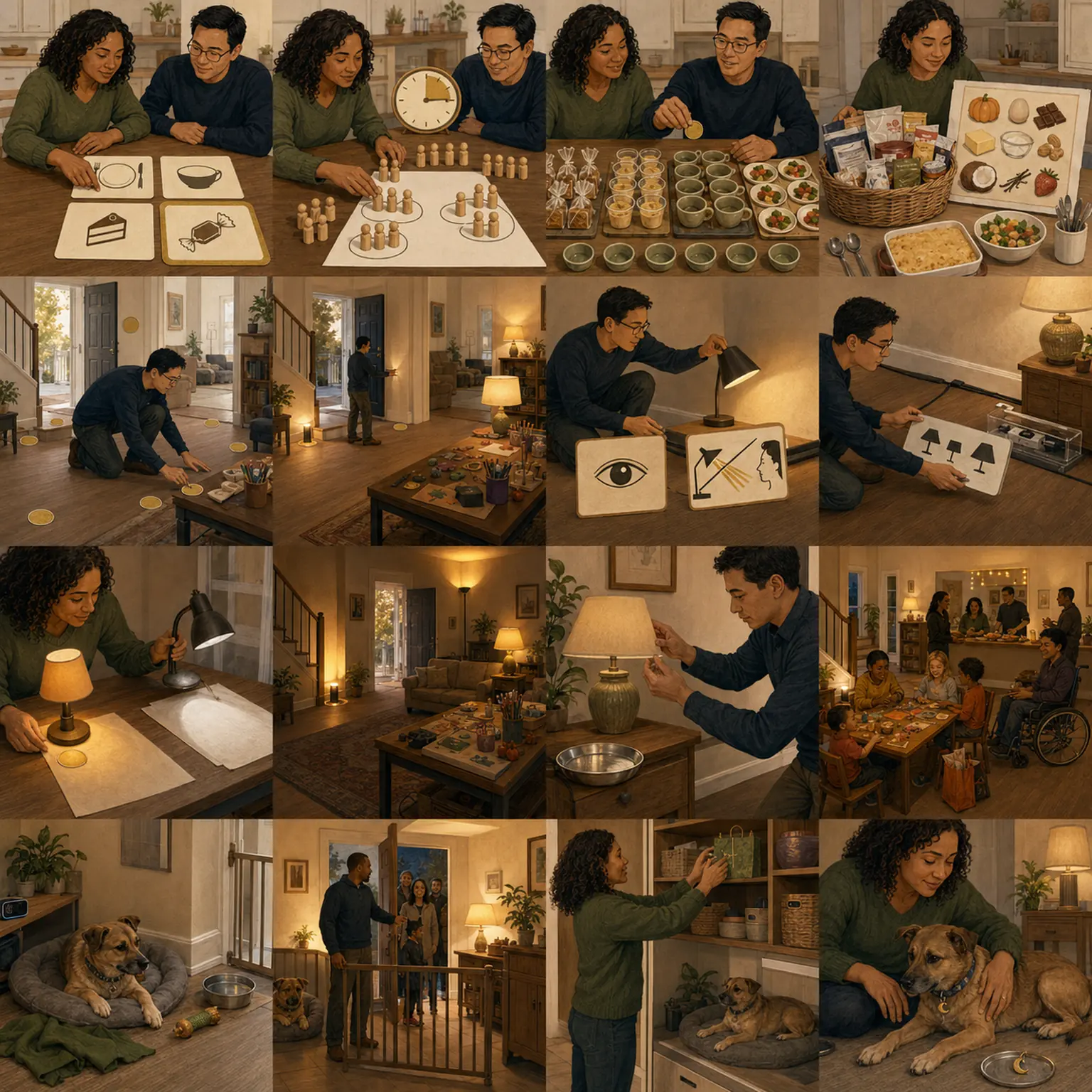
Make fewer, stronger choices
Start with people, place, feeling, time, and limits before selecting things.
The planning library
Twenty-four practical guides turn the decisions behind Halloween into clear timelines, quantities, adaptations, and graceful endings.
The operating method
Start with people, place, feeling, time, and limits before selecting things.
Arrival, activity changes, weather turns, opt-outs, and the final half hour make the night work.
Cleanup, storage, quiet space, food labels, and the way the welcome ends belong in the plan.
Families & groups
Protect the meal, costume test, familiar loop, and calm return so the middle of the night can stay flexible.
A shorter, safer route with an early meal and a prepared landing zone.Open guide ↗Alternate arrival play, one shared make, food, movement, and a calm finish instead of stacking constant stimulation.
A two-hour party with clear transitions and flexible participation.Open guide ↗Give older children real authorship, a clear boundary, and an activity that does not feel designed for younger kids.
An age-respectful night with autonomy and known guardrails.Open guide ↗Rearrange first, borrow second, make one focal point, and spend only where comfort or participation changes.
A coherent night without a pile of low-impact purchases.Open guide ↗Decide what moves indoors, what shortens, and what closes before weather makes the decision for you.
A named weather threshold and an indoor plan that still feels intentional.Open guide ↗Choose two short documentation windows and build one physical memory object that does not interrupt participation.
A small, intentional record and more time inside the event.Open guide ↗Use optional participation, simple materials, clear food information, and activities that reset quickly.
A contained, inclusive classroom sequence with minimal cleanup.Open guide ↗Build a shared beginning and ending, then let the middle branch by energy, fright level, and independence.
A common night with parallel participation rather than one compromised activity.Open guide ↗Move from preparation to setup to getting ready with explicit stop times so the household enters the night together.
A day-of schedule that protects food, dressing, route checks, and host readiness.Open guide ↗Hosting & gatherings
Give the room a point of view, choose food that holds, and build one moment guests will retell.
A paced gathering that lets the host stay inside the party.Open guide ↗Start from people, duration, meal timing, and serving style; label estimates and keep ingredient information visible.
A realistic estimated quantity plan with a modest buffer.Open guide ↗Build warmth through color temperature, reflection, shadow, and repetition instead of exposed flame.
A layered after-dark scene using steady, cool-running light.Open guide ↗Sequence arrival, food, the central moment, open time, and the landing so the night moves without constant announcements.
A flexible event timeline with protected host breaks.Open guide ↗Decide what gets reused, composted, recycled, returned, washed, or discarded before materials enter the room.
A labeled landing system and a 30-minute first reset.Open guide ↗Give each helper a complete job with a finish line instead of a vague request to help.
A short role list that reduces host decisions during the event.Open guide ↗Porches & neighborhoods
Treat the porch as a threshold: clear approach, visible choices, comfortable host, and unmistakable closing signal.
A porch that moves people smoothly without sacrificing atmosphere.Open guide ↗Design the route, activities, and visual moments around actual movement and reach rather than adding access afterward.
A step-free, uncluttered plan with equivalent participation choices.Open guide ↗Separate atmosphere light from task light and make every edge, choice, and exit readable.
A layered, steady-light plan using flame-free sources near people and materials.Open guide ↗Agree on a small shared promise—time window, visible welcome, route notes, or quiet option—without turning neighbors into event staff.
A lightweight shared plan with clear voluntary roles.Open guide ↗Gentler & practical
Transform one room, choose one ritual, and decide how the household will handle the door before evening begins.
A deliberate private evening that still feels seasonal.Open guide ↗Use light, one wall, one table, and reversible changes instead of filling every surface.
A complete Halloween atmosphere that resets into one box.Open guide ↗Clear ordinary clutter, choose one readable transformation, and protect the final setup and safety check.
A complete-feeling night assembled from available materials.Open guide ↗Make the sequence predictable, reduce unavoidable effects, and provide real ways to pause or opt out.
A Halloween people can understand, adjust, and leave without explanation.Open guide ↗Protect a familiar retreat, reduce door traffic, and make participation optional for the animal.
A quieter pet plan with controlled doors, food, costumes, and guest contact.Open guide ↗Ready to turn decisions into a run sheet?