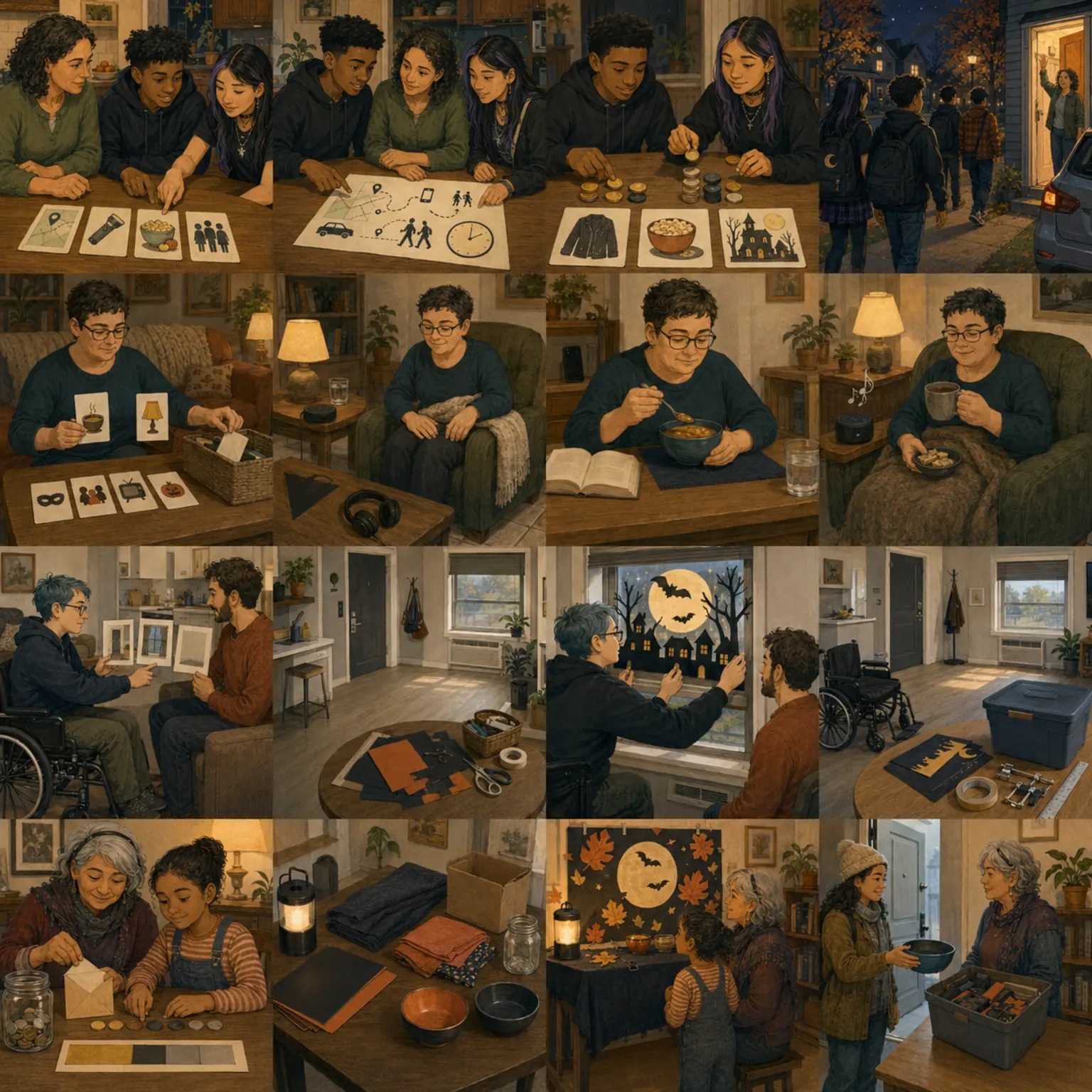
Hosts and households planning for varied sensory needs
Plan a sensory-friendly Halloween
Make the sequence predictable, reduce unavoidable effects, and provide real ways to pause or opt out.
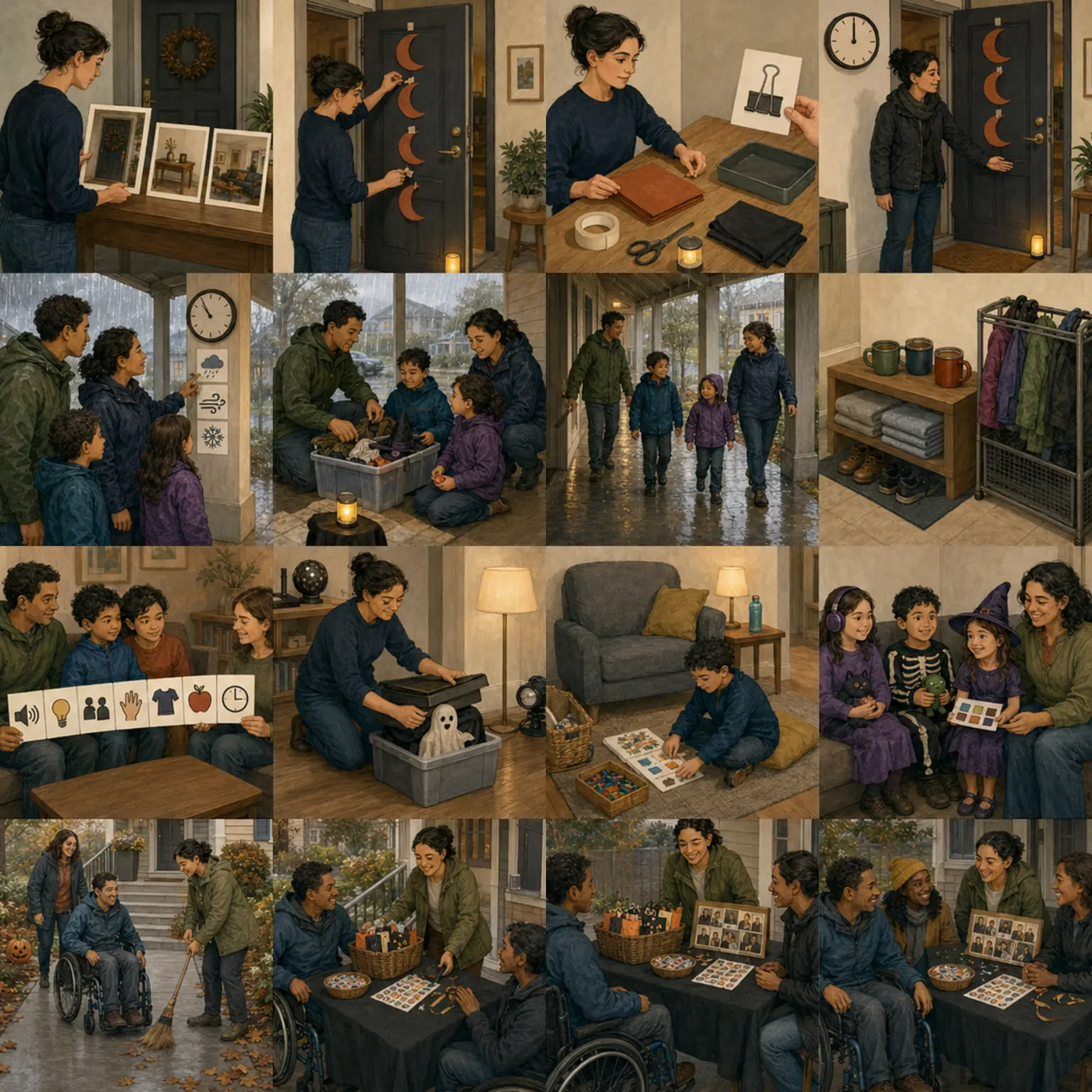
Decisions to make
Resolve these before choosing more things.
- 1
Describe the experience first
Name expected sound, light, crowd, touch, costume, food, and duration.
- 2
Remove surprise effects
Avoid sudden sound, touch, blocked exits, flashing light, and compulsory performance.
- 3
Create a lower-input option
Provide steady light, lower sound, familiar seating, and an independent activity.
- 4
Make opting out ordinary
Offer a role, prop, color, or observation option instead of requiring full participation.
Realistic timeline
Work backward from the night.
- Share the sensory outline
Describe the night and invite specific requests.
- Test from arrival to exit
Notice unavoidable noise, smells, transitions, and bottlenecks.
- Show the quiet option
Point it out without requiring anyone to use it.
- Protect the option
Keep it from becoming storage or overflow seating.
Common failure points
What usually makes this harder.
- Calling a room quiet while sound spills into it
- Requiring disclosure to use accommodations
- Adding effects after describing the plan
Adapt the pattern
Keep the purpose; change the method.
- Offer a daytime version.
- Use a doorbell-free porch window.
- Let the visitor control a steady personal light or headphones.
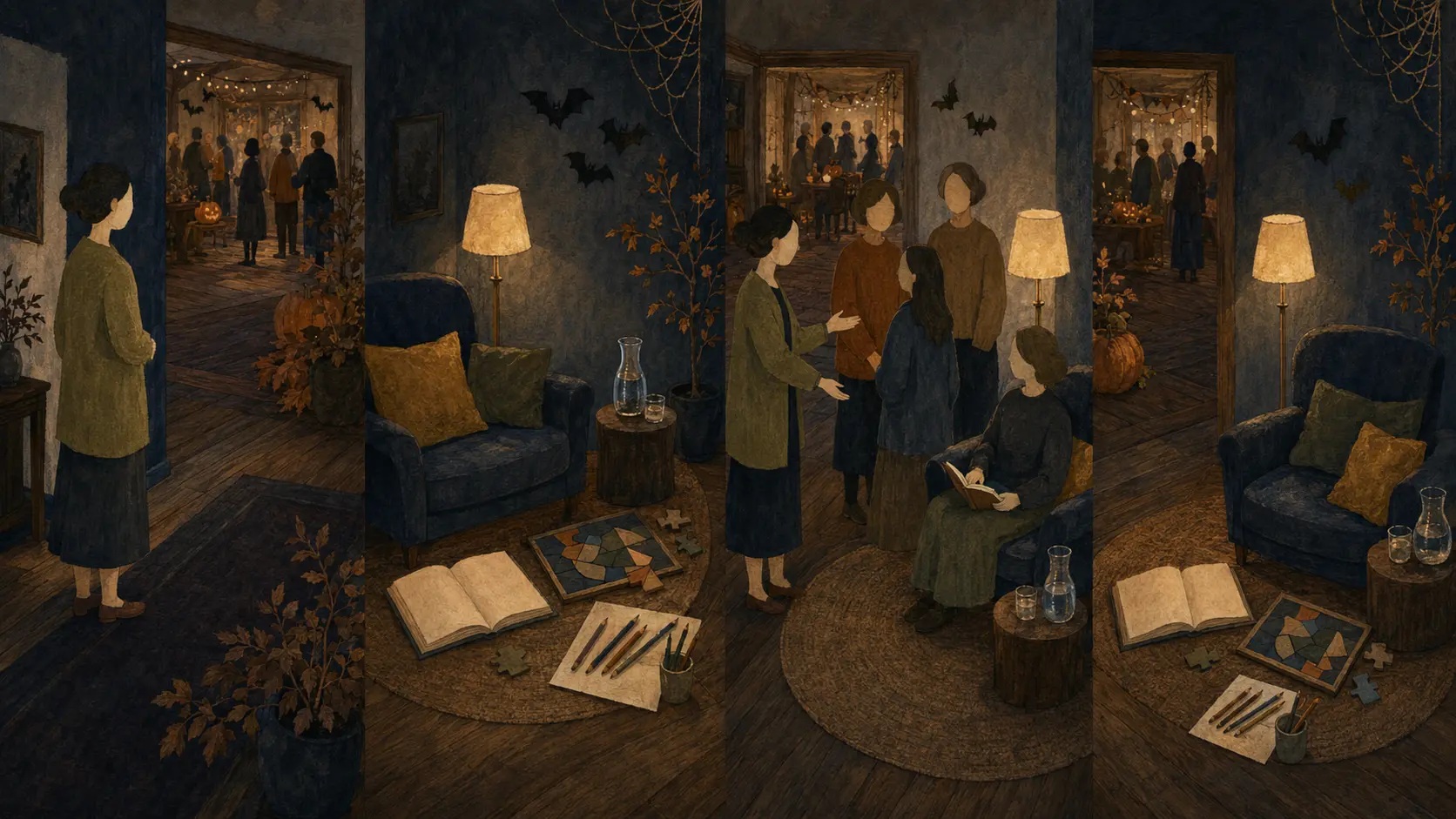
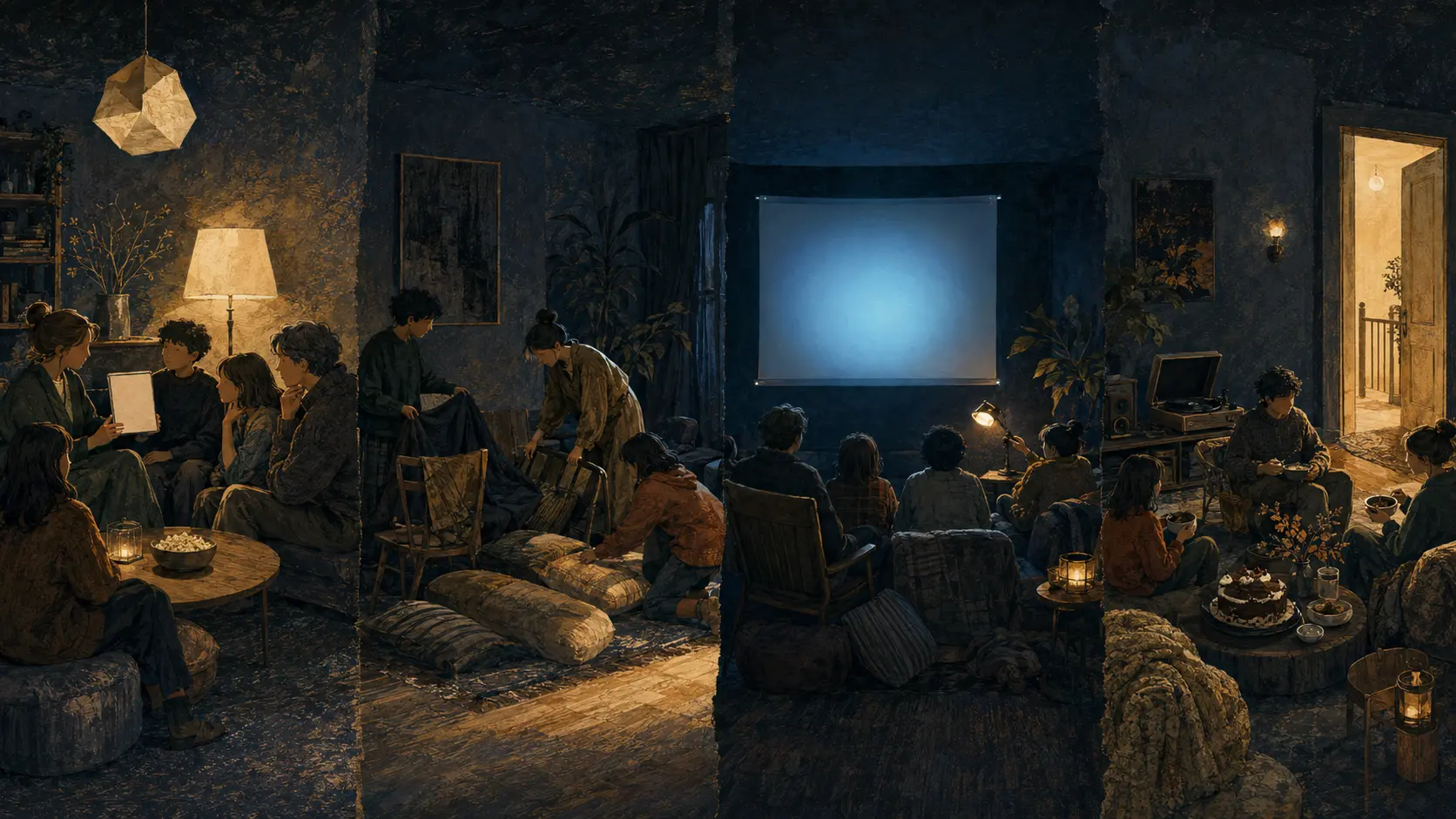
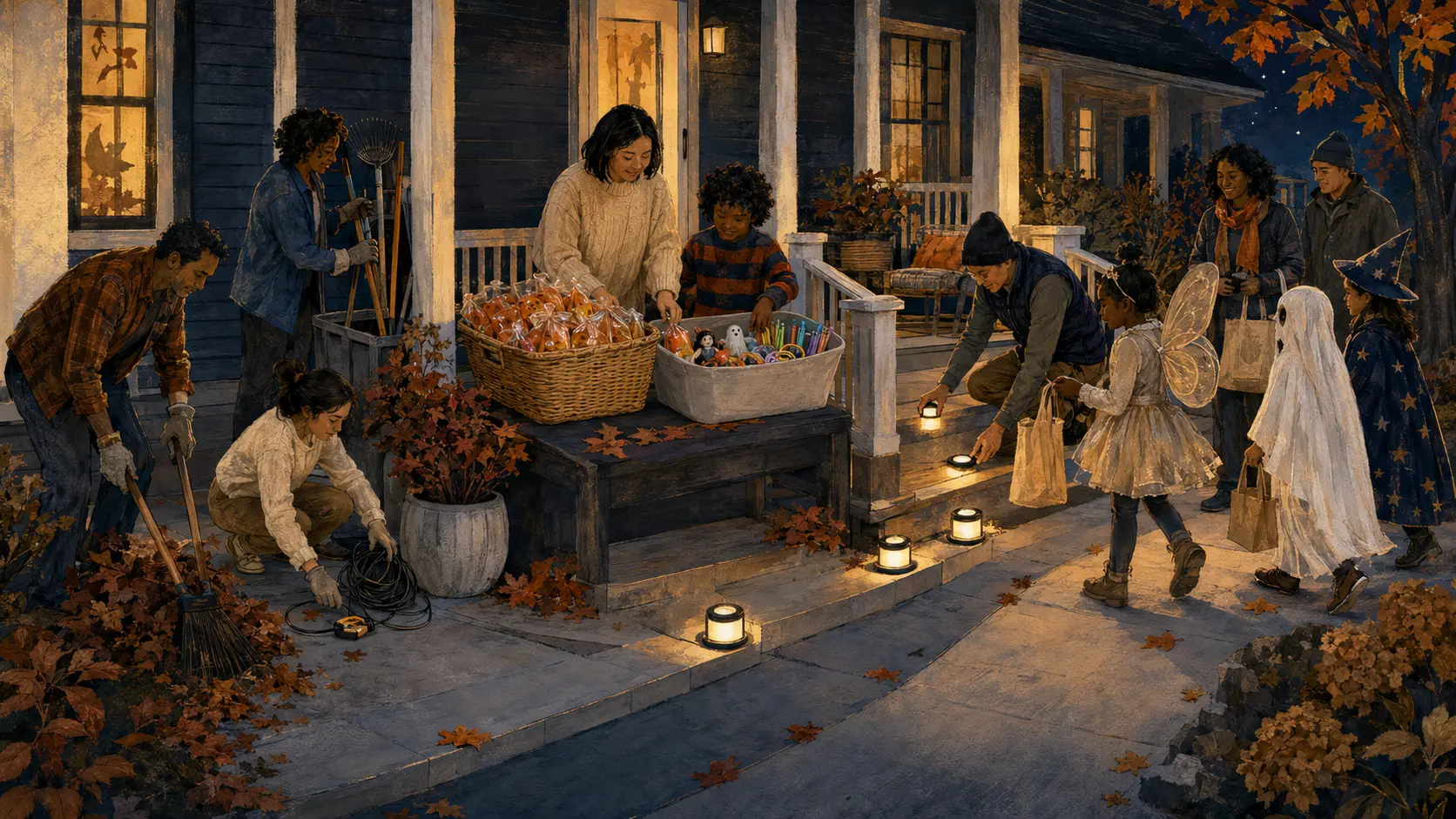
Put the plan into the world
Ideas that fit this plan.
Review & sources
Practical guidance, with a visible review trail.
Reviewed July 15, 2026. Conditions, product instructions, weather, and local requirements still take priority.
This guide contains planning judgment rather than consequential safety claims. Use the Safety Desk for route, food, flame, and costume guidance.
Keep planning